
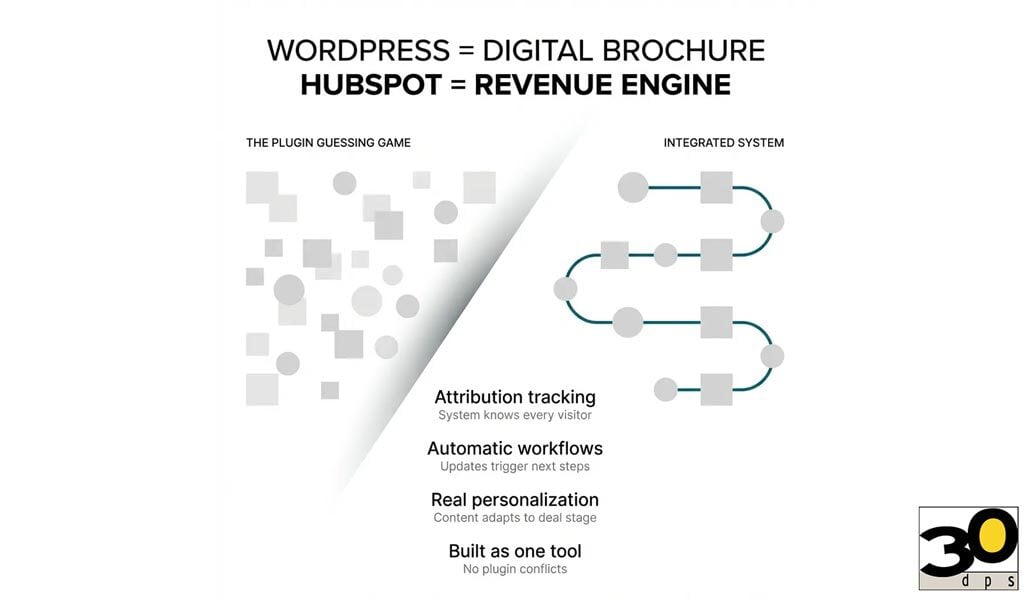
Most websites today are just digital brochures that collect dust.
They might look pretty, but underneath, they are static pages waiting for someone to stumble upon them—no memory, no context, no intelligent follow-up. They serve as online business cards instead of revenue-producing assets. In a world where your buyers research quietly, compare obsessively, and expect relevance at every click, a static site is the digital equivalent of a “closed” sign on your storefront.
I’ve seen hundreds of businesses treat their website like a necessary evil rather than their best salesperson. The budget goes into a redesign every few years, the homepage gets a fresh coat of paint, and then… nothing. No iteration, no learning, no connection to what’s actually happening in the CRM or on the sales floor. Marketing celebrates launch day; sales barely notices. Meanwhile, your prospects are having generic, one-size-fits-all experiences that do nothing to move them closer to a decision.
Here is the difference between a site that sits there and one that sells.
1. Stop building for traffic and start building for intelligence.
Most WordPress sites are set up to count hits. That is vanity. Pageviews, sessions, and bounce rates tell you what happened, but not who it happened to or why it matters. You need a system that identifies who is visiting, what stage of the journey they’re in, and what they actually care about. That means shifting from “How many people visited this page?” to “Which accounts, roles, and opportunities engaged with this content, and what does that tell us about intent?” An intelligent site is wired into your CRM so every click, scroll, and form fill becomes a data point you can act on—not just a number on a dashboard.
2. Connect your content directly to your CRM.
When a visitor reads three pricing pages, your sales team should know instantly. If that data is stuck in a plugin, an analytics platform no one logs into, or a spreadsheet someone updates once a month, the opportunity is already cold by the time you see it. Your content should feed real-time signals into your CRM: which assets are influencing deals, which topics correlate with closed-won revenue, who is moving from casual research into serious evaluation. When web engagement is seamlessly tied to contact, company, and deal records, your reps can prioritize outreach, tailor their outreach, and enter conversations with context instead of guesses.
3. Automate the next step based on behavior.
If someone downloads a technical guide, don't send them a generic "thanks" email. Trigger a workflow that sends them a relevant case study two days later, then a comparison sheet, then an invitation to a tailored demo or assessment. If they watch a full product video, update their lifecycle stage. If they abandon a high-intent form, trigger a gentle follow-up. Context creates conversion, but consistency requires automation. Your website should be the front end of a system that notices patterns, scores intent, and orchestrates timely, relevant touches without your team having to manually chase every signal.
4. Personalize the experience for returning visitors.
When a prospect comes back, your site should greet them by name or show them content related to their last visit. It feels like magic to them, but it’s just good architecture to you. Swap out generic hero copy based on industry. Highlight resources that align with their role or previously viewed topics. Surface pricing, implementation, or ROI content once they’ve engaged with top-of-funnel education. The goal is to make each subsequent visit feel less like a first impression and more like a continuing conversation, bridging the gap between anonymous browsing and one-to-one sales engagement.
5. Measure revenue, not just leads.
The ultimate metric isn't how many forms were filled out. It is how much revenue those specific web actions generated. Which landing pages consistently influence closed-won deals? Which downloadable assets accelerate sales cycles? Which interactive tools produce opportunities with higher average contract values? When your analytics connect the dots between the first click and the final contract, you can stop guessing which parts of your site are working and start investing confidently in the experiences that actually move the needle.
We don't build websites to just look good. We build engines that fuel growth. That means architecting the entire system—site, CRM, automation, integrations, and reporting—so your digital presence behaves like a smart, always-on, always-learning salesperson. Design still matters, but it’s the strategy, data, and workflows underneath that determine whether your site is a cost center or a growth engine.
If your website isn't making your phone ring, filling your calendar, or giving your sales team better conversations every week, it's time to look under the hood. Diagnose where the signal is getting lost between your site and your CRM, where automation could remove friction, and where personalization could turn passive visitors into active buyers. The difference between a brochure and a growth engine isn’t magic—it’s architecture and intent.