
Everyone’s talking about AI and job loss, but that’s rarely why your top performers push back. The resistance is usually far more personal. It’s about identity. It’s about what they’ve staked their careers on, what they’re proud of when they go home at the end of the day, and what other people in the organization count on them for.
We see it all the time when we roll out HubSpot AI tools. Leadership is energized about efficiency, ROI, and finally getting more out of their HubSpot investment. The business case is obvious: fewer manual clicks, cleaner data, faster campaigns, better reporting. On the slide deck, everyone nods along. Then we get to the team level—and things slow down. Not because people truly believe “the robot is taking my job,” but because the people who’ve spent ten or twenty years becoming the go-to experts suddenly feel like novices again. The status they’ve earned over a decade of late nights and hard lessons suddenly feels negotiable.
Picture the person who knows your CRM cold. They’re the fixer. They built their reputation on being the one who can untangle the data, troubleshoot the workflows, or pull the complex report nobody else can. When something breaks, everyone pings them. When a board meeting is coming up and the numbers don’t line up, they’re the one in the war room making it all make sense. That’s not just a task list—it’s their professional identity.
Then you introduce a tool that cleans the data in seconds or generates that report from a simple prompt. Suddenly, the “magic” they’ve been performing for years becomes a button click. To them, that doesn’t feel like a productivity win. It feels like their hard-won expertise is being erased, like the organization is saying, “What you do isn’t special anymore.” Even if that’s not your message, that’s the story they’re at risk of telling themselves.
We recently worked with a client whose team member pushed back hard on a new AI Customer Agent. Leadership was confused—the tool would save her hours of repetitive work every week, reduce response times, and improve customer satisfaction. On paper, it was an obvious enhancement to her role. But for her, those “grunt work” tasks were where she visibly proved her value to the organization. Every detailed reply, every carefully crafted response, every late-night ticket she personally closed—those were receipts that she mattered. When the AI Customer Agent stepped in to handle the first line of interaction, she felt like the visible part of her contribution was being stripped away.
From her perspective, the work that was getting automated wasn’t “low-level.” It was the stage where people saw her competence on display. She wasn’t worried that she’d have nothing to do; she was worried that no one would see what she did.
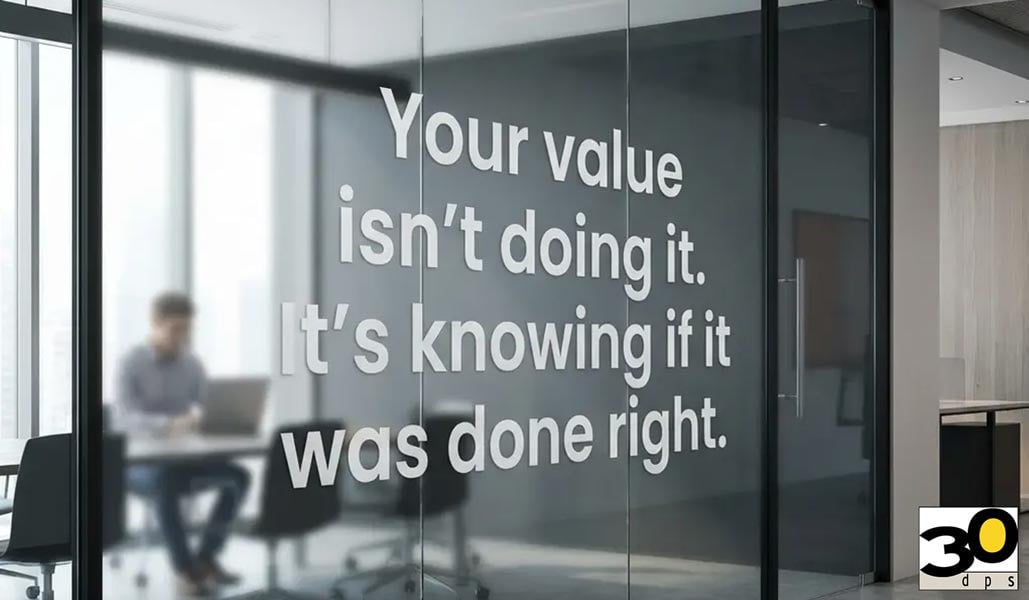
The answer isn’t just more technical training. You can’t train your way out of an identity crisis. It’s reframing what expertise means in an AI-enabled HubSpot environment. Their value is no longer in doing the thing by hand; it’s in knowing what should be done, validating that it was done correctly, and improving the system over time. It’s shifting from “I am the one who clicks the buttons” to “I am the one who decides which buttons should exist and when they should be pressed.” Human Architects producing AI Architecture.
That reframing has to be explicit. It looks like telling your CRM expert, “We need you to be the owner of how this AI runs—what data it uses, how we measure performance, what exceptions it should flag, and when it should hand off to a human.” It looks like giving them authority over prompts, guardrails, workflows, and QA processes, not just asking them to “try the new tool.” It means making it clear that the bar just moved up, and you trust them to operate at that higher level.
An architect doesn’t lose value because they stop laying bricks. They become more valuable because they know exactly which bricks are needed, where they should go, and why the structure matters. The same is true inside HubSpot. The people who used to be the bricklayers of your CRM—building lists, cloning workflows, manually cleaning records—are the ones who can best design, monitor, and continuously improve your AI-driven systems. They understand the edge cases, the historical landmines in your data, and the unintended consequences that can derail a “simple” automation.
When you ask your team to adopt AI inside HubSpot, you’re not simply asking them to learn a new tool. You’re asking them to redraw how they see themselves and how their expertise shows up. That kind of shift doesn’t happen just because you shared a feature release note or recorded a training video.
It requires you to:
-
Name the identity shift directly—tell your experts you see them as architects, not just operators.
-
Redesign roles and responsibilities so AI oversight, prompt strategy, and system governance are clearly owned by humans, not left as “extra” work.
-
Celebrate and report on the wins that come from their architectural decisions, not just the time saved by automation.
-
Provide space for them to experiment, break things safely, and then improve the system without fear of being “replaced” if the AI performs well.
Address that identity shift first, and the technical rollout becomes much smoother—and far more successful. Adoption stops feeling like a threat and starts feeling like a promotion. Your best people lean in, because they can see how their experience powers the next level of performance. That’s when HubSpot AI stops being another feature you turned on and starts becoming a growth system your Human Architects are proud to own.
If you'd like to explore how to make HubSpot's AI work for you, please consider picking a time on my calendar for a brief discussion. We'd love to help you find a pathway to success for you and your team.